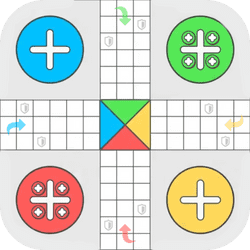
If you grew up playing Ludo, you’ll know the drill. The board still features the familiar blue, green, red, and yellow sections, with each side controlling four pieces and racing toward the home area in the center.
On each turn, roll the die and choose one piece to move by the number shown. The goal is to send all four pieces around the board and bring them home before everyone else. The rules are straightforward, but a rushed move can leave you with fewer options later.
At first, it is tempting to push one piece as far ahead as possible. After a few turns, though, keeping the rest of your pieces moving gives you more ways to use each roll. When the die goes your way, it is smooth sailing. Hit a cold streak, and all you can do is wait for the next turn to catch up.
Ludo keeps the visuals clean and easy to follow. The white board, colored sections, and movement paths remain clear even after several pieces leave their starting areas. Arrows and symbols on certain spaces are also easy to spot at a glance.
Roll the die, join the race, and leave the competition in the dust.